Reverse Engineering the Intel NPU Windows Driver - An MCDM Miniport Architecture Map
Foreword
After working a bit on Nvidia driver installers/drivers, and tooling for binary analysis, I decided to look for another cool project. Since I am constantly on foot, going between courses or cities, my laptop stays almost all the time with me. It was just recently when I found about the NPU chip that comes with my Intel Ultra CPU on the laptop. Never before I needed this so-called “AI boost” in an application of mine. However, I still think it is quite cool piece of tech.
The first thing I decided to take on is running some local models on it and even made a small harness to deal with on-device translation using these NPU-loaded models. Intel NPUs, however, are optimized for running only OpenVINO models.
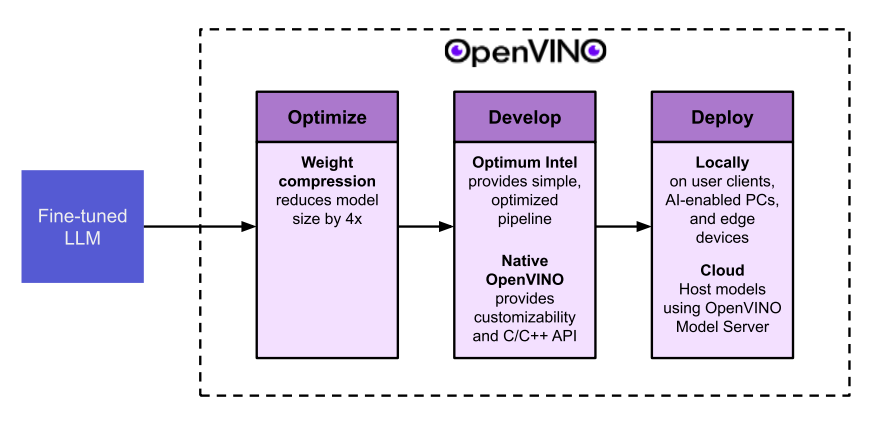 You can learn what is OpenVINO here –> link. The key features span from easy integration such as multi-framework support (PyTorch, TensorFlow, TensorFlow Lite, PaddlePaddle, ONNX), optimized deployment and improved performance of LLMs on consumer Intel hardware.
As a sec guy, I also started fooling around. I went from poking at loaded weights and went all the way to trying to reverse the drivers for this. And so, this is my in-progress reverse engineering against a relatively obscure Windows kernel driver (while there are some relatively similar jobs done in the past, nothing explains the operations of the security-relevant mechanics. If there are and you can link them, please do send them to me, so I can include them here). Cool posts on this topic:
- Reversing and Exploiting Samsung’s Neural Processing Unit
- Fall of the machines: Exploiting the Qualcomm NPU (neural processing unit) kernel driver
So, what is this post? - It’s an architecture map and documentation, not a vulnerability disclosure. It contains no confirmed bug and I don’t claim one (still ;p). Its purpose is to record how npu_kmd.sys is built, how it attaches to the Windows graphics stack, and how an MCDM miniport of this kind is reverse engineered, so the work is reusable as a starting point for anyone auditing this driver or a comparable one. Work paused here for other bug bounties and ideas, but more on this is in the end. This is the first post out of several others that will be coming out, with each one being more offensive than the previous. Right now, let’s start slow and understand the whole scene.
The target driver is npu_kmd.sys, identified as Intel(R) NPU Driver from Intel(R). It is a kernel-mode binary that sits behind both the Microsoft DirectX graphics stack (through the D3D12 user-mode driver path) and the OpenVINO Level Zero stack, mediating access to Intel’s Neural Processing Unit (the “AI Boost” device in Device Manager, Windows).
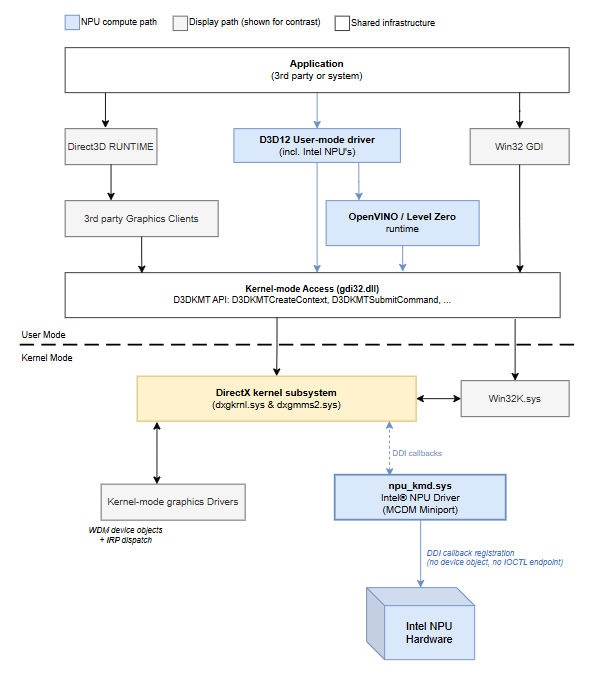 Figure 1 shows where npu_kmd.sys attaches in the Windows graphics dispatch hierarchy. The display path (grey) connects to dxgkrnl via WDM device objects with IRP-based dispatch. The NPU compute path (blue) connects via MCDM DDI callback registration. It creates no device object and exposes no IOCTL endpoint. Section 3 develops this distinction in full.
1. Why the Intel NPU is an interesting target
There are three things make the Intel NPU driver an attractive research target.
It is new. Intel has been shipping a discrete NPU as part of the consumer CPU package only since Meteor Lake’s launch in late 2023. The Windows driver has gone through dozens of revisions with each release adding features and DDI surface. New code is obviously more bug-prone than mature code, and Intel itself has disclosed three “improper conditions check” CVEs in this driver family within a single advisory (INTEL-SA-01403), all patched in version 32.0.100.4297.
It has a Linux counterpart (here). The mainline Linux kernel has shipped the ivpu driver (in drivers/accel/ivpu/) since kernel 6.3. The Linux driver is open source, well-commented, and shares the firmware IPC protocol (the JSM, or Job Submission Messages, API defined in vpu_jsm_api.h) with the Windows driver. This makes Linux useful as it can be used for newcomers to understand foundations and also to, sometimes, be used when decompiling produces an unhelpful output of a Windows function that constructs a JSM message, the Linux source for the same operation is a translatable reference or at least it may be able to help even a bit.
It is reachable from low-privilege contexts. The NPU is accessible via DirectML, which any unprivileged Windows process can use, and via Level Zero, which is similarly accessible. Any vulnerability in this driver is therefore reachable without elevated privileges on the host. That makes the privilege escalation impact direct: an LPE in npu_kmd.sys is, by definition, exploitable from a normal user account.
2. Unpacking the installer
The Intel NPU Windows driver ships as a single self-extracting executable: npu_win_32_0_100_4723.exe. The outer wrapper is a standard PE32+ x86-64 executable produced with an SFX (self-extracting archive) version 3.12.0.0 toolchain. Its only purpose is to extract a RAR5 solid archive and invoke the actual installer.
The archive is solid, individual files cannot be extracted separately so the entire stream must be decompressed in sequence. The archive is extracted with 7-Zip rather than by executing the SFX.
The unpacked tree contains:
1
2
3
4
5
6
7
8
9
10
11
12
13
14
15
16
17
18
19
20
21
22
23
unpacked_npu/
├── installation_readme.txt
├── Installer.exe                    # GUI driver installer, 74.7 MB - runs as Administrator
└── NPU/
    ├── npu.cat                      # Authenticode catalog (WHQL signature chain)
    ├── npu.inf                      # Plaintext driver manifest
    ├── npu_kmd.sys                  # Kernel-mode driver - PRIMARY TARGET
    ├── npu_blob_parser.dll          # Neural network blob parser
    ├── npu_d3d12_umd.dll            # DirectX 12 / DirectML user-mode driver
    ├── npu_driver_compiler.dll      # On-device model compiler (77 MB)
    ├── npu_level_zero_umd.dll       # Level Zero user-mode driver
    ├── tbb12.dll                    # Intel TBB 2021 runtime
    ├── tbbmalloc.dll                # TBB scalable allocator
    ├── ze_loader.dll                # Level Zero loader / dispatcher
    ├── ze_tracing_layer.dll
    ├── ze_validation_layer.dll
    ├── third-party-programs.txt
    └── firmware/
        ├── npu27_firmware.bin       # VPU 2.7 - Meteor Lake
        ├── npu4_firmware.bin        # VPU 4.0 - Arrow Lake
        ├── npu5_firmware.bin        # VPU 5.0 - Lunar Lake
        ├── npu5_hws_firmware.bin    # VPU 5.0 HW scheduler firmware
        └── npu5_oss_firmware.bin    # VPU 5.0 OSS component
The .inf file is plaintext and is the first artifact to read on any Windows driver target. It is the manifest that tells the operating system what hardware to bind the driver to, what service name to register, what filesystem destinations the files copy to, and what registry keys to create. For this target, the relevant entries reveal hardware IDs:
PCI\VEN_8086&DEV_7D1D(Meteor Lake)PCI\VEN_8086&DEV_AD1D(Arrow Lake)PCI\VEN_8086&DEV_643E(Lunar Lake)- Service name. The service-name detail matters more than it should - see Section 7.1.
The installer’s structure matters too. Installer.exe is large (74.7 MB), runs at Administrator privilege during driver installation, and on Intel’s tradition of installer-side bugs, is itself a candidate for privilege escalation through DLL hijacking or unsafe directory creation. (As of now, I haven’t inspected more deeply the installer mechanics)
3. Architecture of npu_kmd.sys
Some readers might have the following assumption - npu_kmd.sys to be a conventional WDM or KMDF driver - a driver that creates a device object, registers IOCTL handlers via DriverObject-->MajorFunction[IRP_MJ_DEVICE_CONTROL] (WDM) or via a KMDF EvtIoDeviceControl callback, and accepts requests from user mode via DeviceIoControl. Most Linux DRM-style drivers translate to Windows as KMDF, and the Linux ivpu reference uses the DRM IOCTL pathway. The natural expectation is that the Windows port preserves the IOCTL surface.
However, this assumption is wrong, and recognizing that it is wrong was important and it is something new that I learnt.
npu_kmd.sys is an MCDM driver. MCDM stands for Microsoft Compute Driver Model, and it is the kernel-side framework Microsoft introduced for compute-only accelerators that participate in the graphics dispatch infrastructure without exposing display capabilities. MCDM drivers register themselves with dxgkrnl.sys (the DirectX graphics kernel) as miniports. They do not maintain their own IOCTL dispatch table. They do not create their own device object with an IOCTL endpoint. Part of their attack surface is the DDI callback table they hand to dxgkrnl during registration, which dxgkrnl then invokes on their behalf when user-mode D3DKMT calls (the kernel-mode-thunk D3D kernel interface) arrive from above.
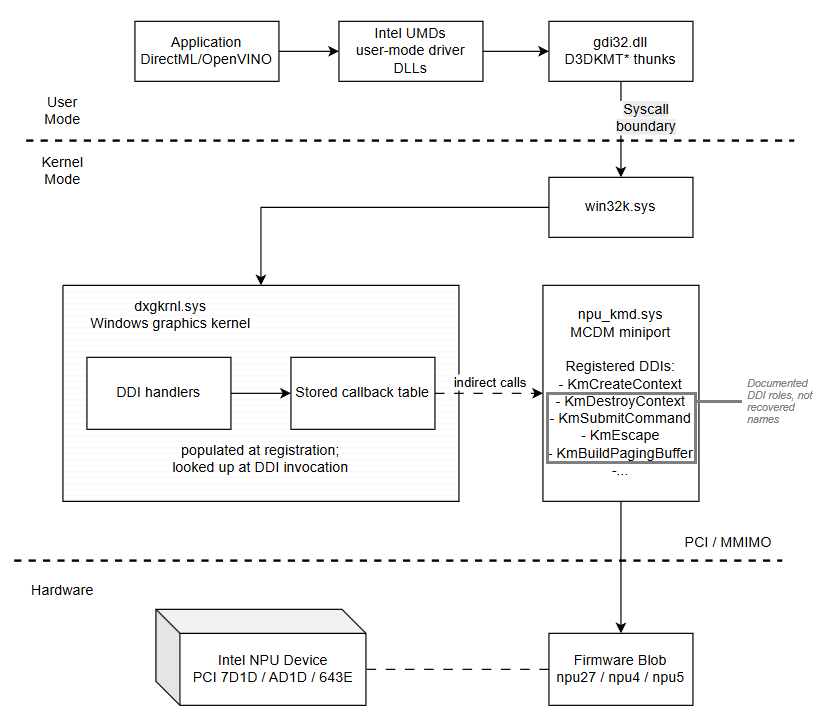 Figure 2 - MCDM architecture overview.
A WDM driver imports IoCreateDevice, IoCreateSymbolicLink, and IofCompleteRequest. A KMDF driver imports WdfDriverCreate, WdfDeviceCreate, and WdfIoQueueCreate. npu_kmd.sys imports neither set.
Enumeration of the PE import table (Ghidra Symbol Tree → Imports) resolves imports from exactly four modules:
1
2
3
4
5
6
7
8
9
10
11
12
13
14
NTOSKRNL.EXE   ExAllocatePool2, ExAllocatePoolWithTag, ExFreePoolWithTag,
               IoAllocateMdl, IoBuildDeviceIoControlRequest,
               IoGetCurrentProcess,
               IoRegisterDeviceInterface, IoRegisterPlugPlayNotification,
               IoWMIRegistrationControl, KeAcquireInStackQueuedSpinLock,
               MmProbeAndLockPages, MmMapLockedPagesSpecifyCache,
               ObReferenceObjectByHandle, ProbeForRead, ProbeForWrite,
               PsCreateSystemThread, RtlGetVersion, ZwLoadDriver, ... (and others)

HAL.DLL        KeQueryPerformanceCounter, KeStallExecutionProcessor

KSECDD.SYS     BCryptOpenAlgorithmProvider, BCryptHashData, BCryptFinishHash, ...

WPPRECORDER.SYS imp_WppRecorderConfigure
Full list: Full import table of npu_kmd.sys
Two observations follow directly from this list. First, the absence of IoCreateDevice/IoCreateSymbolicLink confirms the driver creates no device object of its own, and the absence of any Wdf* import confirms it is not KMDF-bound. Second, there is no static import of dxgkrnl.sys either. The driver does not link against the graphics kernel at load time. The MCDM interface is instead acquired dynamically at runtime: DriverEntry populates a callback structure and hands it to an internal routine (IntelNPU_FrameworkInit) that acquires the dxgkrnl interface through IntelNPU_DxgkAcquireInterface__ and negotiates an interface IOCTL code via DlpGetIoctlCode. The classification of this driver as an MCDM miniport therefore rests on the absence of both the WDM and KMDF marker sets combined with the presence of this runtime interface-negotiation path, not on a static dxgkrnl import. The functions the driver registers with dxgkrnl are detailed below.
The function the loader calls at DriverEntry does not establish an IOCTL endpoint. It zero-initializes a callback structure (a stack local, cleared with memset(&Callbacks, 0, 0x608)), populates it with function pointers, and passes it to IntelNPU_FrameworkInit, which forwards it to dxgkrnl after acquiring the graphics-kernel interface. The structure is identified internally as a DriverCallbacks block; its first dword is a version field (Callbacks._0_4_ = 0x11008 in the analyzed build).
The slot population is extensive, and the full set is mapped. Across DriverEntry, the structure receives 79 distinct writes: one 4-byte version field at offset 0, 50 unconditional 8-byte callback pointers, and 28 further 8-byte pointers gated behind Windows build-number checks. The complete enumeration was produced by walking every write into the [base, base+0x608) stack region in the DriverEntry decompilation and reading the build-number predicate that dominates each gated write; the slot offsets below are decimal, matching Ghidra’s Callbacks._NNN_S_ field notation. The unconditional core is listed first:
1
2
3
4
5
6
7
8
9
10
11
12
13
14
15
16
17
18
19
20
21
22
23
24
25
26
27
28
29
30
31
32
33
34
35
36
37
38
39
40
41
42
43
44
45
46
47
48
49
50
51
52
53
54
// --- version field ---
Callbacks._0_4_      = 0x11008;                  // structure / interface version

// --- unconditional callback pointers (50), by struct offset ---
Callbacks._8_8_      = thunk_FUN_140005420;      // OnInitialize (decompiler-named)
Callbacks._16_8_     = FUN_1403aac70;            // OnStart (swapped to IntelNPU_OnStart_DxgkInterposer inside FrameworkInit)
Callbacks._24_8_     = FUN_1403aadd0;
Callbacks._32_8_     = FUN_1403aae40;
Callbacks._40_8_     = FUN_140010940;
Callbacks._48_8_     = FUN_140002640;
Callbacks._56_8_     = FUN_1400026d0;
Callbacks._64_8_     = FUN_140010900;
Callbacks._72_8_     = FUN_140010910;
Callbacks._80_8_     = FUN_140010920;
Callbacks._88_8_     = FUN_1400027c0;
Callbacks._104_8_    = FUN_1400108f0;
Callbacks._112_8_    = FUN_1403aacf0;            // OnStop (decompiler-named)
Callbacks._136_8_    = FUN_140002c60;
Callbacks._144_8_    = FUN_140003130;
Callbacks._152_8_    = FUN_140032560;
Callbacks._160_8_    = FUN_1400327d0;
Callbacks._168_8_    = FUN_140032910;
Callbacks._176_8_    = FUN_140032c60;
Callbacks._216_8_    = FUN_140003430;
Callbacks._224_8_    = FUN_140003390;
Callbacks._256_8_    = FUN_140002870;
Callbacks._264_8_    = FUN_1400028f0;
Callbacks._272_8_    = FUN_140002740;
Callbacks._280_8_    = FUN_140002960;
Callbacks._400_8_    = FUN_1400031e0;
Callbacks._408_8_    = FUN_1400329f0;
Callbacks._416_8_    = FUN_140032ba0;
Callbacks._464_8_    = KmCreateContext_Wrapper;  // FUN_140002ed0 -> KmCreateContext (FUN_14001ee70), Section 4
Callbacks._472_8_    = FUN_140002fc0;            // adjacent slot - destroy-context candidate
Callbacks._568_8_    = FUN_140002b40;
Callbacks._576_8_    = FUN_140003630;
Callbacks._584_8_    = FUN_1400036c0;
Callbacks._592_8_    = FUN_140003760;
Callbacks._640_8_    = FUN_140002be0;
Callbacks._664_8_    = FUN_140003250;
Callbacks._696_8_    = FUN_140002cf0;
Callbacks._704_8_    = FUN_140002e10;
Callbacks._720_8_    = FUN_140003950;
Callbacks._728_8_    = FUN_1400032e0;
Callbacks._736_8_    = FUN_14003d3c0;
Callbacks._768_8_    = FUN_1400034e0;
Callbacks._776_8_    = FUN_140003590;
Callbacks._816_8_    = FUN_140010930;
Callbacks._856_8_    = FUN_140032c30;
Callbacks._1104_8_   = FUN_140010950;
Callbacks._1112_8_   = FUN_1400049f0;
Callbacks._1120_8_   = FUN_140004a30;
Callbacks._1520_8_   = FUN_140002a50;
Callbacks._1528_8_   = FUN_140003060;            // highest populated offset
The complete map, covering all 79 slots with decimal and hex offset, write size, resolved target, and build-number gate, is also provided as a standalone, sortable HTML companion:
Full DriverEntry callback-slot map
Several structural facts follow from the complete map. The context-creation slot is offset _464, holding KmCreateContext_Wrapper (FUN_140002ed0), which in turn invokes KmCreateContext (FUN_14001ee70) (the function is analyzed in Section 4), and its immediate neighbor _472 (FUN_140002fc0) is the natural destroy-context candidate. The decompiler recovers three slots under symbolic names rather than raw offsets: OnInitialize at _8, OnStart at _16, and OnStop at _112. The lifecycle handlers cluster in the driver’s own 0x1403aaXXX range (OnStart = FUN_1403aac70, OnStop = FUN_1403aacf0, with _24/_32 = FUN_1403aadd0/FUN_1403aae40 adjacent); the bulk of the remaining unconditional slots point into the FUN_140002xxx–FUN_140004xxx and FUN_14003xxxx ranges, and a small post-version cluster (_40, _64, _72, _80, _104, _816, _1104) targets the contiguous FUN_1400108f0–FUN_140010950 group.
The second structural fact is that a large part of the callback surface is conditional on the Windows build number, gated by three RtlGetVersion-driven thresholds. This is not a handful of slots, but it accounts for 28 of the 79 writes, and the great majority activate only on the 24H2 development line:
1
2
3
4
5
6
7
8
9
10
11
12
13
14
15
16
17
18
19
20
21
22
23
24
25
26
27
28
29
30
31
32
33
34
35
36
37
38
39
// build > 21999  (Windows 11 21H2 / build 22000+)  --  1 slot
if (21999 < local_148.dwBuildNumber) {
    Callbacks._208_8_  = FUN_1400038a0;
}

// build > 24999  (25000+, the 24H2 line; 24H2 RTM is build 26100)  --  26 slots
if (24999 < local_148.dwBuildNumber) {
    Callbacks._880_8_  = FUN_140003a30;
    Callbacks._888_8_  = FUN_140003a40;
    Callbacks._896_8_  = FUN_140003a50;
    Callbacks._904_8_  = FUN_140003b20;
    Callbacks._912_8_  = FUN_140003dc0;
    Callbacks._920_8_  = 0;                  // explicitly zeroed under this gate
    Callbacks._928_8_  = FUN_140003ba0;
    Callbacks._1032_8_ = 0;                  // explicitly zeroed under this gate
    Callbacks._1056_8_ = FUN_140003f40;
    Callbacks._1064_8_ = FUN_140003eb0;
    Callbacks._1072_8_ = FUN_140004280;
    Callbacks._1080_8_ = FUN_140004030;
    Callbacks._1088_8_ = FUN_140004130;
    Callbacks._1096_8_ = FUN_1400041e0;
    Callbacks._1144_8_ = FUN_140003c50;
    Callbacks._1152_8_ = FUN_140004270;
    Callbacks._1160_8_ = 0;                  // explicitly zeroed under this gate
    Callbacks._1168_8_ = FUN_140003ce0;
    Callbacks._1296_8_ = FUN_140004330;
    Callbacks._1304_8_ = FUN_140004790;
    Callbacks._1312_8_ = FUN_140004500;
    Callbacks._1320_8_ = FUN_1400045f0;
    Callbacks._1488_8_ = FUN_1400043f0;
    Callbacks._1496_8_ = FUN_1400046e0;
    Callbacks._1504_8_ = FUN_140004820;
    Callbacks._1512_8_ = FUN_140004910;
}

// build > 26999  (27000+, post-24H2 / canary)  --  1 slot
if (26999 < local_148.dwBuildNumber) {
    Callbacks._120_8_  = FUN_140004290;
}
Also, two observations follow. First, the miniport’s callback surface is genuinely OS-version-dependent: 26 of its slots, the FUN_140003a30–FUN_140004910 cluster, consistent with the Windows 11 24H2 hardware-scheduling (HWS) path, are simply absent on systems older than build 25000, and a 27th (_120) appears only on 27000+. Second, three of the 24H2-gated writes (_920, _1032, _1160) are explicit zeroings rather than function-pointer installs: on 24H2 the driver actively clears those slots, which a pre-24H2 system never touches after the initial memset. The populated structure is then handed, after a preparatory IntelNPU_PreFrameworkInit() call, to IntelNPU_FrameworkInit(DriverObject, RegistryPath, &Callbacks), the routine that forwards it to dxgkrnl, and the whole population runs only inside the success branch of a DriverObject/RegistryPath non-NULL check.
A note on the cleared region versus the slot offsets, since the two can look inconsistent at first look. The structure is cleared with memset(&Callbacks, 0, 0x608), and 0x608 is 1544 in decimal. The slot offsets in the Callbacks._NNN_8_ notation are themselves decimal (Ghidra’s convention) so _640, _896, and the highest assignment _1528 are decimal offsets 640, 896, and 1528, not hex. _1528 writes eight bytes ending at offset 1536, still below 1544. Every callback slot is therefore written inside the zero-initialized block; there is no write into uninitialized stack space, and the memset size is not a defect.
This fact makes any IOCTL-fuzzing plan against this driver, pointless. Searching the binary for WdfIoQueueCreate finds nothing. Searching for IRP_MJ_DEVICE_CONTROL finds nothing. One actual attack surface is the set of DDI callback functions enumerated above, reached from user mode through the D3DKMT API exported by gdi32.dll (functions like D3DKMTCreateContext, D3DKMTSubmitCommand, D3DKMTEscape), which dispatches through win32k.sys into dxgkrnl.sys, which then invokes the registered DDI on the miniport.
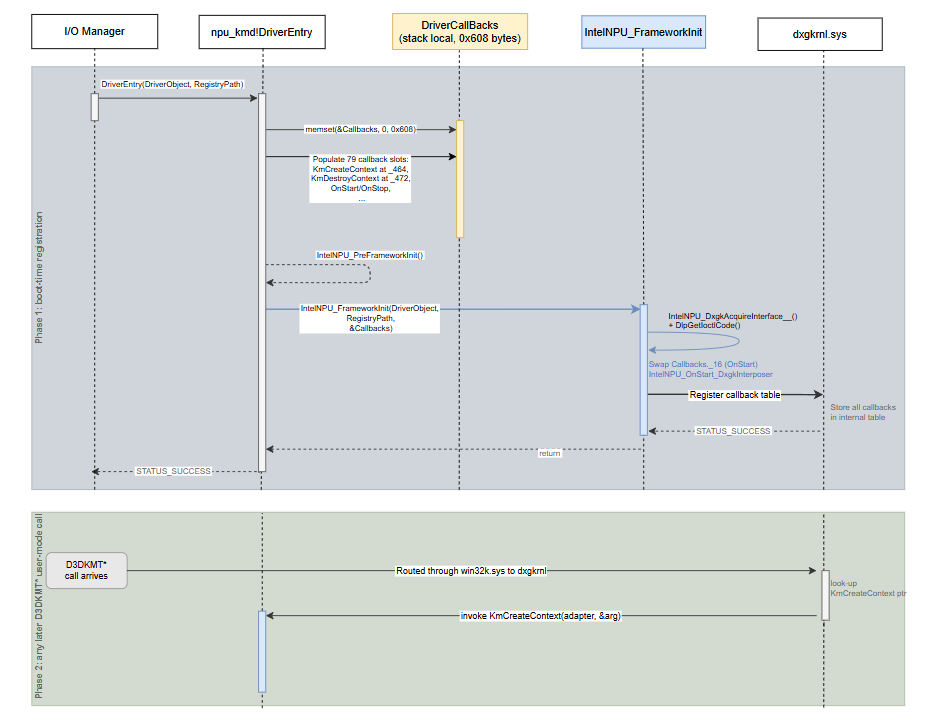 Figure 3 - Driver initialization and callback-structure registration.
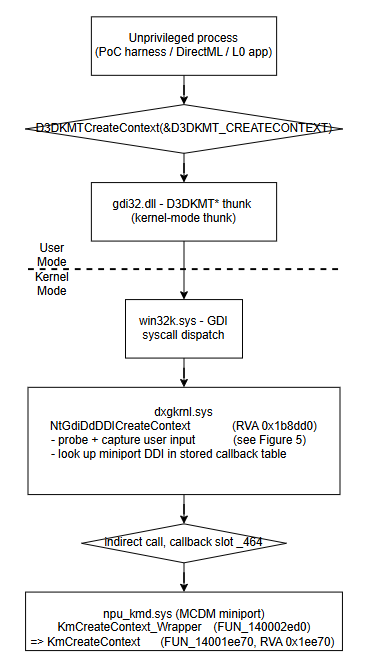 Figure 4 - D3DKMT user-mode-to-DDI dispatch path
This is structurally different from a conventional driver in three ways that matter for vulnerability research.
The trust boundary sits between dxgkrnl and the miniport, not between user mode and the miniport. Anything the miniport receives has already been processed by dxgkrnl, which has its own validation layer. Whether dxgkrnl probes and copies user pointers before handing them to the miniport, or passes them through raw, is a question that has to be answered separately for each DDI. The DDI prototype (the function signature) is documented by Microsoft, but the semantics of what dxgkrnl does before invoking the DDI are not always documented in detail.
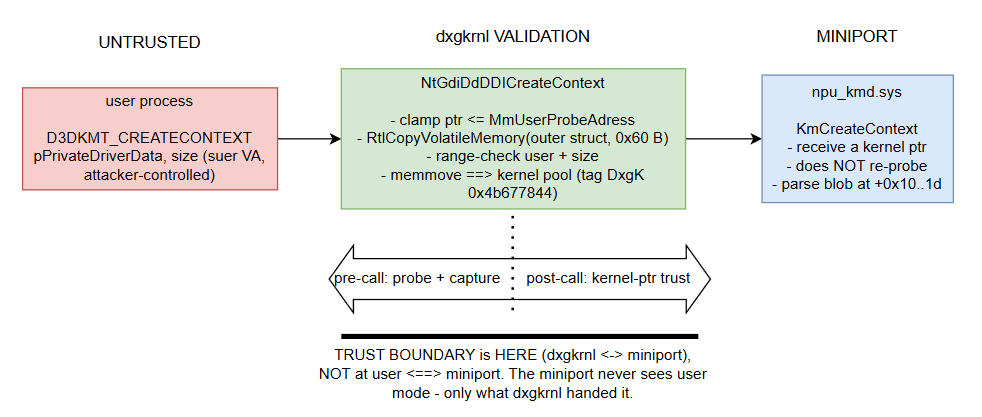 Figure 5. Trust boundary (dxgkrnl validates <—> miniport assumes)
The miniport’s namespace is owned by dxgkrnl. The miniport does not own its own device object. \\.\IntelNPU0 does not exist. The user-mode entry point is D3DKMTOpenAdapterFromLuid, which goes through dxgkrnl, which routes through to the appropriate miniport based on the LUID. This means any user-mode harness has to use the D3DKMT API, not CreateFile on a named device.
Driver Verifier behaves differently against an MCDM miniport than against a WDM driver. Special Pool, IRQL checking, and pool tracking are allocation- and code-path-scoped checks and apply to the miniport’s allocations in the standard way; Microsoft’s Driver Verifier documentation (the “Driver Verifier options and rule classes” reference on learn.microsoft.com) describes these option scopes. The I/O verification class, by contrast, instruments the IRP dispatch path, and an MCDM miniport exposes no such path, so those checks have no targets on this driver. This split follows from which option classes are code-path-scoped versus IRP-dispatch-scoped, so it can be stated from the driver’s static structure alone; a live verifier /query on the test machine would only echo the same conclusion.
4. Static analysis of the KmCreateContext DDI
With the MCDM architecture established, the natural starting point is the simplest DDI in the callback table that takes user-controlled data: DxgkDdiCreateContext. In the Intel binary the miniport’s implementation is internally named KmCreateContext (FUN_14001ee70); the callback slot _464 holds its wrapper KmCreateContext_Wrapper (FUN_140002ed0). The function identity is supported by an embedded build path in the debug strings: D:\qb\workspace\33077\source\npu-driver\Source\Kmd\render\KmContext.c and a source line argument (0x7b) passed to the logging helper.
KmCreateContext receives two arguments. Its prologue, as disassembled by Ghidra, establishes the calling convention and the early validation gate:
1
2
3
4
5
6
7
8
9
10
11
12
13
14
15
16
17
18
19
20
21
22
23
24
25
26
14001ee70  PUSH RBX
14001ee72  PUSH RDI
14001ee73  PUSH R13
14001ee75  PUSH R14
14001ee77  PUSH R15
14001ee79  SUB RSP,0x70
14001ee7d  MOV R15,qword ptr [RCX + 0x8]   ; R15 = device context from arg1+8
14001ee81  MOV R14,RDX                     ; R14 = the DDI argument structure
14001ee84  MOV RBX,RCX                     ; RBX = arg1 (adapter/process context)
14001ee87  TEST R15,R15
14001ee8a  JZ 0x14001f4da                  ; bail if device context is NULL
14001ee90  MOV EDX,dword ptr [R15 + 0xa8]
14001ee99  MOV ECX,EDX
14001ee9b  AND ECX,0x10
14001ee9e  TEST R14,R14
14001eea1  JZ 0x14001f4da                  ; bail if the DDI argument is NULL
14001eea7  TEST ECX,ECX
14001eea9  MOV EAX,EDI
14001eeab  SETNZ AL
14001eeae  INC EAX                         ; EAX = ((flags & 0x10) != 0) + 1
14001eeb0  CMP dword ptr [R14 + 0x8],EAX    ; compare arg+0x8 against that limit
14001eeb4  JNC 0x14001f4da
14001eeba  CMP qword ptr [R14 + 0x18],RDI   ; arg+0x18 (a pointer field) vs 0
14001eebe  JZ 0x14001eecb
14001eec0  CMP dword ptr [R14 + 0x20],0x1e  ; arg+0x20 compared against 0x1e
14001eec5  JNZ 0x14001f4da
The second argument (RDX, aliased to R14 in the prologue) is the DDI argument structure. The disassembly is the definitive reference for the offsets accessed on it: a 4-byte field at +0x8, a pointer-width field at +0x18, and a 4-byte field at +0x20.
Microsoft documents the DXGKARG_CREATECONTEXT structure in the DDK header d3dkmddi.h (_DXGKARG_CREATECONTEXT reference, learn.microsoft.com). The documented declaration is:
1
2
3
4
5
6
7
8
9
typedef struct _DXGKARG_CREATECONTEXT {
  HANDLE                  hContext;            // [out]
  UINT                    NodeOrdinal;         // [in]
  UINT                    EngineAffinity;      // [in]
  DXGK_CREATECONTEXTFLAGS Flags;               // [in]
  VOID                   *pPrivateDriverData;  // [in]
  UINT                    PrivateDriverDataSize;// [in]
  DXGK_CONTEXTINFO        ContextInfo;          // [out]
} DXGKARG_CREATECONTEXT;
On the x64 ABI this places hContext at offset 0x00, NodeOrdinal at 0x08, EngineAffinity at 0x0C, Flags at 0x10, pPrivateDriverData at 0x18, PrivateDriverDataSize at 0x20, and the ContextInfo output region from 0x24 (no padding follows the 4-byte PrivateDriverDataSize, since ContextInfo’s leading member is itself a 4-byte-aligned UINT). Per Microsoft’s description, pPrivateDriverData is a pointer to a block of private data passed from the user-mode display driver to the miniport; dxgkrnl does not interpret its contents. The miniport is the only consumer that parses it.
Note that hContext is the first field of the structure, at offset 0x00, and is an [out] handle the miniport fills in. This layout fact is important for interpreting the +0x20 comparison discussed in Section 4.1 and for the structural questions raised in Section 4.2.
4.1 What the static analysis showed
KmCreateContext allocates a 0x2c18-byte (11,288-byte) per-process VPU context object. The allocation is not a direct ExAllocatePool2 call; it goes through an internal pool-allocation wrapper, FUN_140041d30, observed in the decompile as:
1
2
3
4
puVar10 = (undefined8 *)
          FUN_140041d30(lVar3, 0, 0x2c18, 0, uVar13,
                        "D:\\qb\\workspace\\33077\\source\\npu-driver\\Source\\Kmd\\render\\KmContext.c",
                        "KmCreateContext", 0x7b, 0);
The corresponding disassembly confirms the size and the pool-tag immediates:
1
2
14001efc3  MOV R8D,0x2c18                       ; allocation size
14001efc9  MOV dword ptr [RSP + 0x20],0x20504d40 ; pool tag
A second, smaller allocation of 0x60 bytes is made later in the same function for a hardware-queue object, using the same wrapper and the same tag (14001f26b: MOV R8D,0x60; 14001f274: MOV dword ptr [RSP+0x20],0x20504d40). The tag constant 0x20504d40 is, in the in-memory little-endian byte order that WinDbg !pool displays, the ASCII string @MP (bytes 40 4d 50 20). The tag should be confirmed against a live !pool query before being stated as definitive.
The 0x1e comparison in the prologue requires careful reading. In a Ghidra database with a DXGKARG_CREATECONTEXT structure applied to the second argument, the decompiler renders the comparison as:
1
2
3
4
5
lVar4._0_4_ = param_2->PrivateDriverDataSize;
lVar4._4_4_ = param_2->Padding2;
if ((lVar4 != 0) && (*(int *)¶m_2->hContext != 0x1e)) {
return -0x3ffffff3;
}
The comparison is against the field the applied structure labels hContext. Per the documented layout reproduced in Section 4 (hContext at offset 0x00), and per the prologue disassembly (CMP dword ptr [R14 + 0x20],0x1e), the value compared against 0x1e is the 4-byte field at argument offset +0x20. Under the documented Microsoft layout, offset +0x20 is PrivateDriverDataSize.
The decompile field names are unreliable here and the structure applied to param_2 is misaligned relative to the documented DXGKARG_CREATECONTEXT, which is why it labels the +0x20 field as hContext (a field the documented layout places at +0x00). The raw disassembly is the authority, and it is unambiguous: the dword compared against 0x1e sits at argument offset +0x20, and the read immediately before it (CMP qword ptr [R14 + 0x18],RDI) is a non-zero test on the pointer-width field at +0x18. Under the documented layout, +0x18 is pPrivateDriverData and +0x20 is PrivateDriverDataSize.
The check is therefore a size check, and an exact-equality one: if pPrivateDriverData (+0x18) is non-NULL, then PrivateDriverDataSize (+0x20) must equal exactly 0x1e (30 bytes), or the call is rejected. It is not a type/version tag. This matters for the dereference-reachability question below: the five blob reads top out at +0x1d (byte 29), which is in bounds of a 0x1e-byte buffer so a buffer too small to satisfy the reads is rejected at this gate, and a buffer of any size other than exactly 0x1e is rejected.
At first I thought that there are five distinct dereferences of the pPrivateDriverData blob at offsets +0x10, +0x14, +0x18, +0x1c, and +0x1d, but a first automated pass did not reproduce that set and the offset map came back empty (bruh), but that empty result is itself also useful. The extractor’s dereference inventory was written to match an untyped decompile: it searched for a local assigned from param_2[3]. Run against a database with a struct applied, the decompiler emits the field-name form (param_2->PrivateDriverDataSize) instead, which that pattern cannot match, so the inventory returned nothing. The reads themselves are present and are read directly from the disassembly. The relevant excerpt:
1
2
3
4
5
6
7
8
9
lVar6 = *(longlong *)¶m_2->PrivateDriverDataSize;
/* ... */
if (lVar6 != 0) {
*(bool *)(puVar10 + 0x56c) = *(int *)(lVar6 + 0x10) != 0;
*(bool *)((longlong)puVar10 + 0x2b61) = *(int *)(lVar6 + 0x14) != 0;
FUN_14001fdb0(*(undefined4 *)(lVar6 + 0x18), puVar10 + 0xb,(longlong)puVar10 + 0x5c);
*(undefined1 *)((longlong)puVar10 + 100) = *(undefined1 *)(lVar6 + 0x1c);
*(undefined1 *)(puVar10 + 0x56b) = *(undefined1 *)(lVar6 + 0x1d);
}
The reads at lVar6 + 0x10/0x14/0x18/0x1c/0x1d are real and gated only by lVar6 != 0. And lVar6 is the pPrivateDriverData pointer. This is established by the prologue disassembly, independently of any applied struct. lVar6 is assigned *(longlong *)¶m_2->PrivateDriverDataSize; the misapplied struct places its PrivateDriverDataSize field at argument offset +0x18, which is the low dword of the eight-byte value the prologue tests with CMP qword ptr [R14+0x18],RDI. Argument offset +0x18 is, under the documented DXGKARG_CREATECONTEXT layout, exactly pPrivateDriverData, and the prologue’s non-zero comparison treats +0x18 as a pointer-width field. So lVar6 is a read of the documented pPrivateDriverData pointer, and the five reads off it are dereferences of the private-data blob. The original “five dereferences” description was correct, for the reason given above…
The reads are now gated by two things, both visible statically: the exact-0x1e size check in the prologue, and the lVar6 != 0 non-NULL test. What static reading cannot settle is whether lVar6 points into a kernel buffer that dxgkrnl sized and owns, or into user-controlled memory and that is the question the rest of this section delves into.
So what does all this say about it? I assume there are two possible runtime behaviors, distinguishable only at runtime. They are recorded here as the point at which static analysis of this DDI reaches its limit.
Behavior A: raw user pointer reaches the miniport. If dxgkrnl passes the user-mode pPrivateDriverData pointer through to KmCreateContext without capturing it into a kernel buffer, the lVar6 + 0x10 … +0x1d reads in KmCreateContext are reads from a user-controllable kernel-mode pointer. In that case, the dereferences would be reading whatever address the user supplied - including, if the user supplied a kernel address, the contents of kernel memory.
Behavior B: captured buffer; reads stay in bounds. If dxgkrnl captures pPrivateDriverData into a kernel pool buffer (the standard Microsoft “Full Capture” pattern), it allocates and copies PrivateDriverDataSize bytes. Because the prologue has already forced PrivateDriverDataSize to be exactly 0x1e, that buffer is exactly 0x1e (30) bytes, and the five reads, topping out at +0x1d, byte 29 - fall inside it. Under Full Capture, then, the dereferences are in-bounds reads of a correctly-sized kernel buffer - not a vulnerability on this path.
The two behaviors are mutually exclusive. Settling down between them requires observing the pointer dxgkrnl passes to the miniport at the instant of the DDI invocation, a runtime step outside the scope of this post. The static evidence does not stop at the miniport boundary, however: Section 5 traces the dxgkrnl side of the same path and establishes which of the two behaviors the static evidence supports.
4.2 The structure question: divergence or mis-application?
At the very beginning when I was looking at KmCreateContext I thought it accesses a structure that is different from the documented Microsoft DXGKARG_CREATECONTEXT layout. That’s why I named the structure INTEL_DXGKARG_CREATECONTEXT_EXT to mark it as a form of “vendor-extended layout”. The evidence gathered after that does not support that conclusion, though.
The table below compares the documented Microsoft layout against the offsets actually seen in KmCreateContext’s prologue, as read directly from the disassembly:
| Arg offset | Documented DXGKARG_CREATECONTEXT field |
Access observed in KmCreateContext prologue |
|---|---|---|
0x00 |
hContext (HANDLE, [out]) |
not read in prologue |
0x08 |
NodeOrdinal (UINT) |
CMP dword ptr [R14+0x8], EAX - compared against context-count limit |
0x0C |
EngineAffinity (UINT) |
not read in prologue |
0x10 |
Flags (DXGK_CREATECONTEXTFLAGS) |
- |
0x18 |
pPrivateDriverData (VOID*) |
CMP qword ptr [R14+0x18], RDI - non-zero test on a pointer field |
0x20 |
PrivateDriverDataSize (UINT) |
CMP dword ptr [R14+0x20], 0x1e - compared against 0x1e |
0x24 |
ContextInfo (DXGK_CONTEXTINFO, [out]) |
written later in the function |
Read this way, the prologue accesses are consistent with the documented layout: a UINT at +0x08 (NodeOrdinal), a pointer at +0x18 (pPrivateDriverData), and a UINT at +0x20 (PrivateDriverDataSize). No divergence is required to explain them.
The asymmetry found earlier is instead a result of the Ghidra database: the DXGKARG_CREATECONTEXT structure type applied to the second argument is misaligned, which is why the decompiler labels the +0x20 field as hContext (a field that the documented layout places at +0x00). The decompile field names in the current database are therefore unreliable. (Another reason, to be conformable with reading Assembly as only the raw disassembly can confirm this)
All this is worth writing down, because it changes how the decompile reads. The decompile contains a field it calls param_2-->pPrivateDriverData that is only ever bit-tested (& 3, & 0x10, >> 4, & 1), never dereferenced as a pointer. By data-flow and by semantics, that mislabelled field is almost certainly the documented Flags field at +0x10: a & 0x10 test gating the hardware-queue allocation reads naturally as the HwQueueSupported flag bit. The actual pPrivateDriverData pointer is the eight-byte value at +0x18, which the same misaligned struct surfaces under the name PrivateDriverDataSize. The two are cross-wired by the bad struct type; the raw offsets are not affected by it.
The leading-field layout is therefore the standard documented DXGKARG_CREATECONTEXT, and the INTEL_DXGKARG_CREATECONTEXT_EXT naming is dropped. The trailing region is resolved as well. Re-decompiling KmCreateContext with the misapplied structure removed and reading the raw offsets directly, the writes into the output region land exactly on the documented DXGK_CONTEXTINFO members and nowhere beyond them:
+0x24DmaBufferSize(0x1000)+0x28DmaBufferSegmentSet(a segment bitmask)+0x2cDmaBufferPrivateDataSize(0x1000)+0x30AllocationListSize(0xaa)+0x34PatchLocationListSize(0xaaa)+0x3cCaps(the first capability bit, set via|= 1).
DXGK_CONTEXTINFO is eight ULONGs spanning +0x24 through +0x43; the highest offset KmCreateContext touches is +0x3c (the Caps field, ending at +0x3f), with Reserved (+0x38) and PagingCompanionNodeId (+0x40) left at their post-memset zero.
5. Tracing the call chain through dxgkrnl
A note on decompiler variable names. From this section onward, decompiler output uses my explicit renaming convention rather than Ghidra’s auto-generated local names. Each renamed variable keeps its original name as a
_PAST<ghidra_name>suffix, so any renamed variable is traceable back to the raw decompiler output. For thedxgkrnlCreateContextanalysis the mapping is:
local_148–>input_struct- the user-modeD3DKMT_CREATECONTEXTlocal_138–>user_PrivateDriverData_ptr_PASTlocal_138local_130–>PrivateDriverDataSize_PASTlocal_130local_168–>kernel_PrivateDriverData_copy_PASTlocal_168local_180–>created_context_object_PASTlocal_180Excerpts that retain raw
local_NNNnames are unannotated decompiler output reproduced verbatim.
Section 4.1 ended on a question that cannot be settled inside npu_kmd.sys: whether dxgkrnl captures pPrivateDriverData into a kernel buffer before invoking the miniport, or passes the user pointer through. Answering that question required following the call chain from the user-mode D3DKMTCreateContext API down into dxgkrnl.sys.
The path from user mode to the miniport runs through D3DKMTCreateContext (exported by gdi32.dll) –> the corresponding syscall stub in win32k.sys –> NtGdiDdDDICreateContext (the kernel-mode handler in dxgkrnl.sys) –> DXGDEVICE::CreateContext –> the registered miniport DDI. NtGdiDdDDICreateContext calls DXGDEVICE::CreateContext directly; the similarly-named DxgkCreateContextVirtualInternal / DxgkCreateContextVirtualImpl pair belongs to a separate sibling chain that serves the D3DKMTCreateContextVirtual entry point, not the non-virtual D3DKMTCreateContext path traced here. The chain still spans several stack-argument-heavy calls (which Ghidra’s signature recovery reconstructed quite badly), inside which a probe-and-capture step might or might not occur.
Figure 6 - internal dxgkrnl chain + Full-Capture inset (The internal dxgkrnl call chain from NtGdiDdDDICreateContext through DXGDEVICE::CreateContext, with the three-step Full-Capture inset (RtlCopyVolatileMemory -> operator_new[] (DxgK tag) -> memmove) highlighted)
Static analysis of dxgkrnl!NtGdiDdDDICreateContext shows three sequential operations on the user input:
- Probe-and-copy of the outer struct. The function clamps the user pointer to
MmUserProbeAddressand copies 96 bytes (0x60) of theD3DKMT_CREATECONTEXTstructure to a kernel stack frame viaRtlCopyVolatileMemory. The clamp ensures that a user pointer pointing into kernel address space is replaced byMmUserProbeAddressitself before the copy, so the copy cannot dereference kernel memory. - Bounded kernel-pool allocation. From the kernel-stack copy of the outer struct, the function reads
pPrivateDriverDataandPrivateDriverDataSize. If both are non-zero, it allocates a kernel pool buffer withoperator_new[](size, 0x4b677844, 0x100). The tag value0x4b677844decodes in little-endian as ASCII bytes44 78 67 4B=DxgK, which is the standarddxgkrnl-owned pool tag. - Range-checked copy into the kernel pool. Before
memmoveruns, the function checks thatuser_ptr + sizedoes not wrap (integer overflow guard) and that the resulting end pointer does not exceedMmUserProbeAddress(upper-bound guard). On failure either guard, the function takes an exception path. On success,memmove(kernel_pool_ptr, user_ptr, size)copies the user buffer into the kernel pool allocation.
(The three-step probe –> allocate –> range-checked-copy sequence above is depicted as the highlighted inset of Figure 6.)
The kernel pool pointer that results from step 2 is then forwarded toward the miniport DDI. The dxgkrnl enumeration confirms the capture sequence directly: the verbatim decompiler excerpt shows _Dst = operator_new[]((ulonglong)PrivateDriverDataSize_PASTlocal_130, 0x4b677844, 0x100) followed by memmove(_Dst, user_PrivateDriverData_ptr_PASTlocal_138, …), and the callgraph slice confirms operator_new[] resolves to ExAllocatePool2. The tag 0x4b677844 is DxgK in little-endian byte order (44 78 67 4b).
The forwarding call into the device-level method is now resolved. The dxgkrnl enumeration recovers DXGDEVICE::CreateContext at RVA 0x2de368, and its demangled prototype is:
1
2
3
4
5
6
7
8
9
public: long DXGDEVICE::CreateContext(
    class DXGCONTEXT **,                 // [out] created context object
    unsigned int,                        // NodeOrdinal
    unsigned int,                        // EngineAffinity
    struct _D3DDDI_CREATECONTEXTFLAGS,   // Flags
    void *,                              // pPrivateDriverData (the captured kernel-pool pointer)
    unsigned int,                        // PrivateDriverDataSize
    enum _D3DKMT_CLIENTHINT,             // ClientHint
    unsigned char)                       // a byte flag
That is eight declared parameters; counting the implicit this, the method takes nine arguments.
It is worth noting one tag-disambiguation point for the reader: the dxgkrnl capture buffer carries the tag DxgK (0x4b677844), whereas the per-process VPU context object allocated inside npu_kmd.sys (Section 4.1) carries the distinct tag @MP (0x20504d40). The two tags belong to two different allocations owned by two different components and must not be mixed when reading !pool output.
The static evidence therefore shows that on the NtGdiDdDDICreateContext path the standard Full Capture pattern is implemented: probe, allocate, range-check, copy, forward kernel pointer. The remaining open question is whether the pointer that reaches the miniport at the moment of the DDI invocation is in fact the kernel-pool pointer produced by this path. That question is settled only by runtime observation of the DDI invocation, which is outside the scope of this static map; Section 7.3 records it as the boundary at which this analysis stops.
6. Why emulation does not answer the open question
The question Section 5 leaves open is what dxgkrnl passes to KmCreateContext after the full NtGdiDdDDICreateContext path has run, and despite me wanting to, this cannot be settled by emulation. Settling it that way would require emulating, at minimum:
dxgkrnl.sysand its full DDI dispatch machinery- The MCDM miniport registration handshake, which depends on
dxgkrnl’s internal state from boot - The user-mode-to-kernel-mode transition with
pPrivateDriverDataarriving from a real user VA space - The pool allocator, whose behavior determines whether the captured buffer lands in a region with a recognizable tag
MmUserProbeAddresssemantics, which depend on the current process’s VA layout and the kernel’s mode-switch state
Emulating the NT graphics subsystem to that depth is just too much to a single forwarded-pointer question. The question is one for runtime observation on real hardware, not emulation; Section 7.3 records it as the boundary at which this static map stops.
7. The static/dynamic boundary
This section explains where static analysis of the KmCreateContext path stops. The dynamic phase itself with kernel-debugger observation of the live DDI invocation, will be outside the scope of this blog post.
7.1 Locating the loaded binary
On Windows, kernel drivers installed via INF land in C:\Windows\System32\DriverStore\FileRepository\<package>_<hash>\, where the hash is per-package. The authoritative location is whatever the running driver service points to:
1
2
Get-CimInstance Win32_SystemDriver | Where-Object {$_.Name -eq 'npu'} |
    Select-Object Name, PathName, State, Started
On the test system this resolves to C:\WINDOWS\system32\DriverStore\FileRepository\npu.inf_amd64_cdb3a40167d50623\npu_kmd.sys, version 32.0.100.4621. The service name is npu, not npu_kmd: the binary filename and the service name are unrelated, and the INF declares the service name explicitly via the AddService directive. sc query <name> and many WinDbg conveniences key off the service name.
7.3 The unresolved question
- Section 4.1 reduced the
pPrivateDriverDatareads inKmCreateContextto a single binary question: does the pointer that reaches the miniport hold adxgkrnl-captured kernel buffer (Behavior B, Full Capture) or the raw user pointer (Behavior A, Pass-Through). - Section 5 traced the
dxgkrnlside and found the Full Capture pattern, probe, allocate, range-check, copy, implemented on theNtGdiDdDDICreateContextpath; the static evidence therefore points to Behavior B. Confirming which pointer actually reaches the miniport at the instant of the DDI call requires runtime observation and is not part of this map.
8. Scope of this “map”
This section records what the map covers, what is deliberately out of scope, and the questions left open for a follow-on effort.
8.1 What the map covers
- Installer structure mapped
npu.infparsed; service name confirmed asnpu(binary filename isnpu_kmd.sys).npu_kmd.sysidentified as an MCDM miniport, not WDM/KMDF. This is the most consequential architectural finding.- Three platforms supported: VPU 37xx (Meteor Lake), VPU 40xx (Arrow Lake), VPU 50xx (Lunar Lake), distinguished by firmware blobs and PCI IDs.
- DDI callback registration path identified, and the complete
DriverEntrycallback table enumerated: 79 writes in total (one version field, 50 unconditional callback pointers, and 28 build-number-gated pointers), with every offset, target, and gate resolved (Section 3). KmCreateContextdecompiled and annotated as a worked example.DXGKARG_CREATECONTEXTargument layout cross-referenced against Microsoft documentation; an apparent structural divergence traced to a misaligned Ghidra struct application rather than a confirmed vendor extension, and a struct-removed re-decompile confirmed the trailing region carries no Intel extension. Every write lands inside the documentedDXGK_CONTEXTINFO(Section 4.2).- Dereferences inside
KmCreateContextmapped at+0x10,+0x14,+0x18,+0x1c,+0x1drelative to thepPrivateDriverDatapointer. - The two possible runtime behaviors (Behavior A and Behavior B in Section 4.1) framed and reduced to one observable distinction.
- Inside
dxgkrnl.sys,NtGdiDdDDICreateContexttraced throughRtlCopyVolatileMemory(input-struct probe-and-copy),operator_new[](size, 0x4b677844, 0x100)(kernel-pool allocation withDxgKtag), andmemmove(range-checked user-to-kernel copy). The static evidence is consistent with the Full Capture pattern on this path. - INTEL-SA-01403 (the three “improper conditions check” CVEs patched in
32.0.100.4297) reviewed as a reference for where new instances of the same class might live.
8.2 What is out of scope
Dynamic tests: kernel-debugger observation of the live KmCreateContext invocation, and anything that requires the driver to be exercised at runtime is not part of this map. Section 4.1 and Section 5 carry the pPrivateDriverData question as far as static analysis allows; Section 7.3 records the boundary.
8.3 What the map does not yet cover
The complete callback table is now enumerated in Section 3, but the map stops at the registration layer: it records every populated offset, its target function, and its build-number gating, without resolving which Microsoft DDI role (beyond DxgkDdiCreateContext at _464) each slot implements. Mapping the remaining offsets onto their DxgkDdi* roles, and analysing the individual handlers, is the natural next layer of work.
The following are named here as attack surface but not analyzed in this document:
- the cleanup and error-path handling inside
KmCreateContext - the Escape DDI surface
- the behaviour of the 24H2 hardware-scheduling (HWS) callbacks (now enumerated as the build-
24999-gated slots in Section 3, but not individually analyzed) - the firmware loader path
- the paging-buffer DDI
- the firmware-blob format.
The installer (Installer.exe) and the user-mode DLLs are a separate, user-mode attack surface not examined here.
8.4 Open questions
These are the questions that I will consider trying to answer in the future.
- Does the pointer reaching
KmCreateContexthold adxgkrnl-captured kernel buffer or the raw user pointer? Section 5 shows the Full Capture pattern on thedxgkrnlside; runtime confirmation is the open item. - The prologue’s exact-
0x1esize gate (Section 4.1) means a Full-Capture buffer is always 30 bytes and the five reads (max+0x1d) are in bounds, so the captured-buffer out-of-bounds question is closed by static analysis. - Does the cleanup function handle all partial-initialization states in
KmCreateContext’s error paths? - Where are the
pHwOpsvtable assignment sites that resolve per-generation hardware abstraction? - Did
4723versus4621introduce any change inKmCreateContextor adjacent functions? - Are there DLL hijacking opportunities in
Installer.exeor any of the user-mode DLLs? - Does the firmware loader verify the firmware blob itself, or rely only on the on-disk WHQL signature? If unverified, this is a firmware-integrity gap.
9. Closing note
The whole idea of this document is the map itself: the identification of npu_kmd.sys as an MCDM miniport, the DriverEntry callback-registration mechanism, the D3DKMT-to-DDI dispatch path, the dxgkrnl trust boundary, and a worked static analysis of one DDI (KmCreateContext) carried to the point where static evidence runs out.
Its value is as a reference for anyone auditing this driver, or a comparable MCDM compute miniport.
About the next posts: I love talking about this in the end, because it kinda forces me to not bail out on these ideas, but to actually finish them. So I am looking at several other targets and ideas as well:
- ProGuard Obfuscation and finding your way around it
- Large Lange Model weights forensics and “weights steganography”
- JetBrains bleeeh ;p
Offsets in npu_kmd.sys version 32.0.100.4723.
Love from RaptX